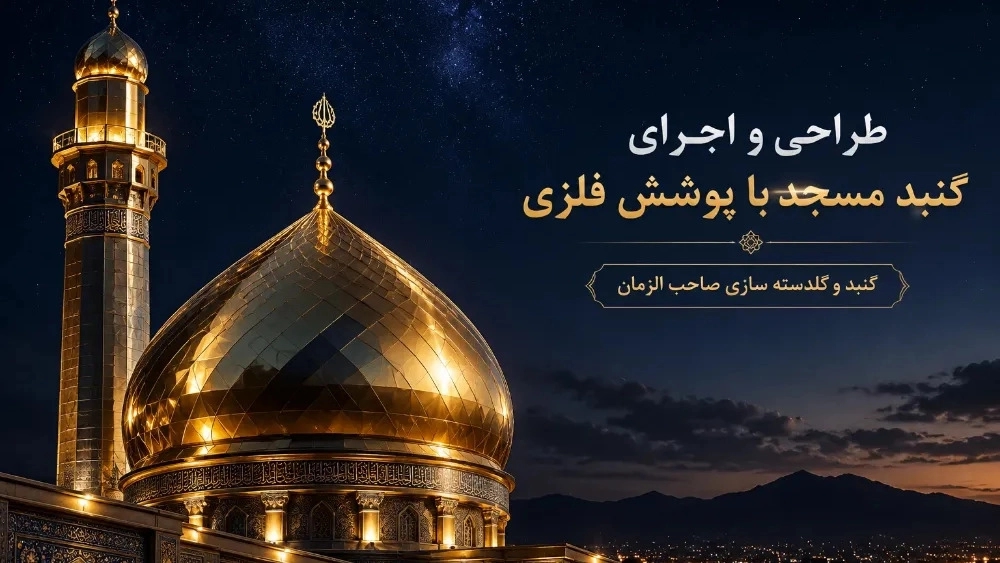
The dome of the mosque is one of the most significant elements of Islamic architecture, which, in addition to creating a magnificent and spiritual effect, plays an important role in the visual identity of religious buildings. The fundamental design of the mosque dome, the selection of the appropriate metal covering and the precise implementation of the details of Islamic architecture are among the factors that affect the beauty, durability and final quality of the project. Nowadays, by using new construction methods, resistant materials and advanced technologies, it is possible to implement all kinds of metal domes in different dimensions and designs.
Meanwhile, it is very important to choose an expert group for the design, construction and installation of the dome; Because the dome must have good resistance to weather conditions, humidity, direct sunlight and environmental forces in addition to its appearance. Saheb al-Zaman dome and rosary construction focusing on the construction and execution of domes and rosary for mosques and religious places, can be an option to consider and choose in projects related to Islamic architecture.
If you intend to build a dome that is durable, beautiful and in harmony with the architectural identity of the mosque, familiarizing yourself with the design steps, choosing the metal covering, decorative details and standard implementation criteria will help you make a more accurate decision.
The design of the dome of the mosque based on the principles of Islamic architecture
Designing the dome of the mosque is the first step in the formation of a beautiful and lasting religious structure. At this stage, the geometric proportions, dimensions of the building, height of the dome, type of structure, coating color and the way of decoration should be determined. The appropriate design makes the dome harmonize with the facade of the mosque and visually creates a proportional and eye-catching effect.
Choosing the right form for the dome of the mosque
The domes of mosques are designed in various shapes and styles. Hemispherical dome, onion dome, elongated domes and multi-part designs are among the forms that can be examined according to the architectural style, project conditions and client's taste.
In choosing the form of the dome, attention should be paid to the dimensions of the building, the height of the minarets, the proportions of the exterior and the architectural features of the region. For example, elongated domes can emphasize the visual height of a building, while shallow domes usually create a more balanced appearance.
Sahibul Zaman dome and garland making can help employers in the process of reviewing different designs to choose a suitable form for the dome of the mosque, taking into account the needs of the project. The final decision must be made based on the plans, the possibility of implementing the structure and coordination with the existing building.
Compliance with geometric proportions and dimensions of the dome
One of the most important principles in the design of the mosque dome is to observe the proportion between the diameter of the base, the height of the dome and the overall dimensions of the building. A dome that is designed without considering the scale of the building may look disproportionate or require more reinforcements in the structural parts.
In professional design, the dimensions of the dome are determined according to the architectural plan and structural calculations. The weight of the cover, the type of substructure, the connection to the body and the loads caused by the wind should also be considered in the design. Paying attention to these matters provides the basis for safer implementation and increasing the durability of the dome.
The metal cover of the mosque dome and its features
Metal coating is one of the common methods for building and finishing religious domes. This type of coating is used in dome construction projects due to its shapeability, the possibility of implementing various designs and compatibility with different substructure methods.
Choosing the right cover depends on factors such as the dimensions of the dome, geometric shape, climatic conditions, project budget, desired color and the amount of decorative details.
Advantages of using metal coating in dome construction
Using metal cover in the dome of the mosque can have many advantages. Among these advantages, we can mention the ability to make parts that fit the shape of the dome, the ability to implement curved surfaces, variety in color and final finish, and the ability to repair or replace damaged parts.
Also, if the foundation is properly designed and the appropriate coating is chosen, the weight of the complex can be controlled within the designed range. However, the final performance depends on the type of metal, sheet thickness, quality of connections, installation and maintenance conditions, and not all metal coverings can be considered the same in terms of durability or weight.
Choosing the right metal for covering the dome
In the construction of the metal dome, the materials should be selected based on the technical and appearance requirements of the project. Steel with a protective coating, painted sheets and corrosion-resistant metals are among the options that can be considered according to the project conditions.
In humid areas or cities with a lot of rain, corrosion resistance and the quality of the protective coating become more important. In hot and sunny areas, durability of color, resistance to sunlight and performance of connections should be taken into consideration.
The final choice should be made after checking the technical specifications of the materials, weather conditions and maintenance cost. Using the wrong material may cause discoloration, corrosion, water penetration or increase repair costs in the long run.
Details of Islamic architecture in the design of the dome of the mosque
The beauty of the dome of the mosque is not limited to its general shape. Geometric motifs, coloring, inscriptions, traditional arrays and the way the dome is connected to the body of the building play an important role in the formation of its architectural identity. The correct implementation of these details can make the dome one of the most prominent visual elements of the religious complex.
The role of geometric patterns and traditional decorations
Geometric patterns are well-known elements in Islamic architecture. Star designs, geometric grids, repeating patterns and symmetrical compositions can be used according to the shape of the dome and the architectural style of the mosque.
In the design of these motifs, attention should be paid to the scale of the surface, the distance of the lines, the appropriateness of the colors and the ability to execute the design accurately. Fine details on large domes may not be visible from a distance; Therefore, choosing the right size of roles has a great impact on the final result.
Choosing the right color for the metal dome
The color of the dome is one of the important factors in the coordination of mosque architecture. Turquoise, blue, green, gold colors and combinations inspired by traditional architecture are among the common choices in the design of religious domes.
To choose the color, attention should be paid to the color of the facade of the mosque, the surrounding materials, the covering of the garlands and the environmental conditions. Also, the type of paint and final coating should be compatible with the metal material so that it can perform properly against humidity, sunlight and temperature changes.
In professional projects, it is better to confirm the final color by providing a sample or a proposed design before starting construction and installation. This reduces the possibility of differences in taste and the need for expensive modifications.
Execution of inscriptions and religious arrays
Inscriptions and religious phrases can be executed in parts of the dome or related components. Choosing the right place, the readability of the writings and their coordination with the form of the structure is one of the important points of this stage.
In the implementation of the inscription, attention should be paid to the size of the letters, the distance between the components, the strength of the materials and the way the parts are connected. Any decorations added to the dome cover should also be checked in terms of weight and wind resistance so that the appearance does not affect the safety of the structure.
The stages of construction and implementation of the mosque dome with metal cover
The basic implementation of the dome of the mosque is a multi-stage process that begins with the project site survey and continues until the final installation, quality control and delivery. Coordination between architectural design, structural calculations and operational operations plays an important role in the final quality.
the first stage; Site visit and review of project needs
In the first stage, the dimensions of the installation site, the condition of the existing structure, access conditions, working height, and operational restrictions are checked. If the dome is going to be installed on an old building, the condition of the supporting parts and the load bearing capacity should also be evaluated by experts.
At this stage, the needs of the client about the form of the dome, color, decorations, timing and budget are determined. Collecting accurate information from the beginning reduces the possibility of unwanted changes in later stages.
the second stage; Drawing and technical design
After inspecting the site, architectural drawings and executive details are prepared. These drawings should specify the main dimensions, the shape of the dome, how to divide the cover, the substructure, the location of connections and the details related to sealing.
In large domes, the design of the structure and connections must be done by a qualified specialist. Dead loads, wind, installation conditions and regulatory requirements are among the things that should be included in the calculations.
the third stage; Construction of infrastructure and skeleton of the dome
Skeleton and infrastructure are the main supporting parts of the dome's metal cover. The shape and dimensions of this complex must be in harmony with the architectural form and transfer the incoming forces to the load-bearing parts of the building.
Selecting metal sections, designing connections, controlling the quality of welding or screws and checking the condition of the supports are very important at this stage. Improper implementation of the infrastructure can change the shape of the cover, create vibrations or problems at the joint.
the fourth stage; Cutting and shaping of metal coating
After the preparation of the infrastructure, the parts of the cover are cut according to the drawings and are made into the required shape. Accuracy in measuring and shaping makes the parts fit together correctly during installation.
In domes with a complex shape, the division of the surface should be such that both the implementation of the cover is possible and the seams and connecting lines do not disturb the overall appearance of the design. Prefabrication of parts in the workshop can help control quality and reduce installation time on site.
the fifth stage; Installation of metal cover and implementation of sealing
At this stage, the cover parts are placed on the substructure based on the order of installation and designed details. The way to connect parts should be chosen according to the type of metal, environmental conditions and the possibility of thermal expansion and contraction.
Sealing of seams, edges and connection to other parts of the building is particularly important. If the sealing details are not implemented correctly, water may penetrate under the cover and cause corrosion or damage to the underlying components in the long run.
The sixth stage; Implementation of decorations and final finishing
After finishing the coating, it is time to implement decorative details, final color and appearance control. At this stage, the coordination of colors, uniformity of the surface, the regularity of the seams and the quality of the connection of the arrays should be checked.
Decoration should be done without causing uncontrolled overload or damage to the protective layer of the metal. At the end, sensitive points are checked in terms of sealing, connections and safety so that the dome is ready for use.
Factors affecting the cost of mosque dome design and implementation
The cost of building the dome of the mosque depends on various factors and the same price cannot be considered for all projects. The dimensions of the dome, the complexity of the form, the type of metal, the weight of the structure, the construction method, the decorative details and the installation conditions are the most important factors that determine the price.
Dimensions and height of the dome
The larger the dimensions of the dome, usually the amount of materials, the volume of construction operations, and the implementation requirements increase. The height of the installation site can also affect the cost of access equipment, transporting parts and securing the workshop.
Type of coating and quality of materials
Differences in metal material, sheet thickness, type of protective coating and paint quality can change the initial cost and maintenance costs. Choosing the cheapest materials does not always mean the most economical decision; Because the cost of early repairs may be higher in the long run.
Complexity of design and decorations
Installation conditions and project location
Features of a professional set for dome building
Choosing the right contractor is one of the most important decisions in dome and garland construction projects. Executive experience, the ability to coordinate between design and construction, attention to safety and transparency in the declaration of costs, are among the criteria that should be checked.
Examining related portfolios
Before choosing a contractor, it is better to see real examples of the construction of metal domes, garlands and Islamic architectural decorations. The quality of connections, regularity of covering, appropriateness of the form and quality of the final payment are some of the things that are important in reviewing the portfolio.
Transparency in the contract and schedule
Description of services, type of materials, range of responsibilities, implementation schedule and payment terms should be specified in the contract. It is also better to determine how to control the quality and the conditions for dealing with possible defects at the time of delivery.
Attention to safety and quality of execution
Working at height and installing heavy metal parts requires careful planning and compliance with safety requirements. The use of appropriate equipment, safe containment of parts and technical supervision during installation are essential measures to reduce operational risks.
Why choose Sahib Al-Zaman's dome and garland for project review?
To build the dome of the mosque, it is very important to choose a collection that can understand the architectural and operational needs of the project. Saheb Al-Zaman dome and garland construction is a name you can check to get information about services related to the design, construction and implementation of domes and garlands.
When negotiating with this collection, it is better to inquire about the possibility of implementing the desired form, type of metal coating, substructure method, decorative details, installation conditions and post-implementation services. Reviewing related portfolios and getting a written estimate will help you make an informed choice.
If your project involves the construction of a new dome, the renovation of the existing dome cover, or the implementation of a garland in harmony with the architecture of the mosque, providing maps, site images and approximate dimensions will help the contractor prepare a more accurate proposal. Choosing the right materials and designing according to the conditions of the project are important factors in achieving a beautiful and durable result.
Maintenance of the metal dome after execution
The durability of the dome of the mosque is not only dependent on the quality of construction; Periodic maintenance also plays an important role in maintaining its appearance and performance. Regular inspection can identify potential problems before they become serious injuries.
Periodic inspection of cover and connections
The condition of seams, joints, paint coating and corrosion-prone parts should be checked at intervals according to climatic conditions. A safety and appearance assessment can also be useful after severe storms or unusual weather conditions.
Sealing control and corrosion prevention
Infiltration of water under the coating or damage to the metal protective layer may provide the basis for corrosion. Repairing the seams in time, repairing the damaged paint and using materials compatible with the original materials will help to increase the useful life of the dome.
Preserving the decorations and final color
To avoid damage to the color and arrays of the dome, the cleaning method should be chosen according to the type of coating. Using inappropriate detergents or abrasive tools can scratch the surface and damage the protective layer. Repair and cleaning operations at height should also be done by trained people and in compliance with safety principles.
summary; Building a durable dome with a basic design
Designing and implementing a mosque dome with a metal cover is a specialized process that requires architectural coordination, structural calculations, selection of suitable materials, and accurate execution of details. The shape of the dome, the quality of the foundation, the way the parts are connected, sealing, and the choice of colors and decorations, all affect the final result.
To achieve a beautiful and durable dome, it is better to carefully check the plans and implementation needs before starting the project and estimate the cost based on the actual specifications. Also, choosing an executor based on the portfolio, transparency of the contract and attention to safety will reduce the possibility of problems.
Saheb al-Zaman dome and garland making can be one of the considered options for dome building and garland making projects. By receiving technical information, reviewing portfolios and specifying desired details, you can plan your project implementation path with more awareness.